
Delays in transportation are not always due to traffic or adverse weather conditions. Many of them are due to a missed phone call, a driver who hasn’t received the necessary information, or a dispatcher who was already provided with information that is 20 minutes old. Communication should not be seen as a secondary process in logistics but rather as the nervous system itself. If it doesn’t work, nothing else will.
Table of Contents
The real cost of information lag
Every minute a driver sits idle because dispatch hasn’t confirmed their next stop is a minute of margin lost. This isn’t abstract. According to the American Transportation Research Institute (ATRI), traffic congestion costs the trucking industry approximately $94.6 billion annually. That number gets attention, but what rarely gets discussed is how much of that congestion impact is made worse by slow internal communication. A driver stuck on a blocked route, waiting for a reroute that takes eight minutes to reach them instead of one, has already lost time that can’t be recovered.
The fragmentation problem is common and consistent. Drivers on personal mobile apps, dispatchers on different platforms, customer service teams working from spreadsheets – none of these systems talk to each other without a person in the middle relaying the message. Every relay is a delay.
From radio and SMS to a unified environment
Transitioning from phone calls and messaging apps is not about change just for the sake of it. It’s about establishing a common point of truth that every team member has access to in real time. When dispatchers, drivers, and warehouse personnel can view the same live information, decisions are quicker and errors are minimized.
This is only possible with cloud technology. For instance, a dispatcher working remotely and a driver on the road can both access and modify the same record instantly. Route optimization is no longer a calculation made before the operational day starts. It’s a real-time re-evaluation based on live GPS and telematics data, including current traffic conditions, to dynamically reconfigure operations. The driver doesn’t need to make a phone call and be informed they’re being redirected; the rerouting appears as an update to their planned movements.
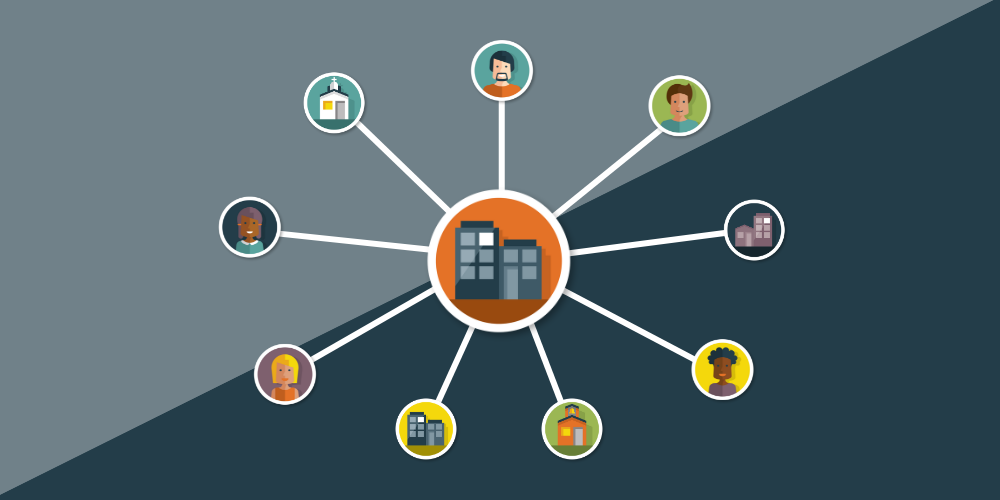
Modern transport management systems achieve this by serving as the central node of all your operational hardware and software. GPS, telematics hardware, carrier APIs, and customer-accessible notification and reporting systems all interact with your TMS and each other. Siloed, localized dispatching where you have a coordinator essentially acting as a switchboard in between different departments is done away with. Instead, autonomous, self-propagating workflows mean that the information is pushed to the person that needs it rather than through someone.
Documentation delays at the point of delivery
One of the most underestimated points of resistance during transport is not on the road, but where the goods are delivered. Drivers have to wait for signatures, paperwork has to be filled out manually, bills of lading need to be checked against what is in the system before the subsequent delivery can be confirmed. All these delays accumulate during the day.
Most of these delays disappear when proof of delivery and bill of lading are digitized. If a driver records a signature or takes a photo using a device connected to the central system, the delivery can be confirmed and the stop closed within seconds. With dozens of stops per day for an entire fleet, this quickly adds up.
Standardized documents also offer protection against conflicts. A signature with a time and location is a better proof of delivery than a handwritten signature with no information about when it was provided.
Keeping customers informed without adding workload
“Where is my order” inquiries – known as WISMO in the industry – represent a substantial volume of incoming contact for customer service teams. Most of these calls happen during delays, when customers have noticed something is off but haven’t been told anything yet.
Automated notifications solve this without adding headcount. When the central system detects that a delivery is running behind, it can trigger a customer alert immediately, without anyone on the team having to write and send it manually. This shifts the dynamic from reactive to proactive.
The secondary benefit is that customer service teams integrated into the central communication hub can pull live status information rather than calling dispatch to find out what’s happening. The loop closes faster, and the customer gets a real answer rather than a “let me check on that.”
Using historical data to find recurring bottlenecks
Once communication is centralized and logged consistently, the data starts telling a different story. Managers can look back across months of records and identify patterns – specific distribution centers with consistently high dwell times, routes where delays cluster around the same hours, carriers whose check-in compliance creates downstream scheduling problems.
Predictive analytics built on this kind of historical data allows teams to plan around known problem areas rather than reacting to them every time. That’s the difference between a team that’s always firefighting and one that’s removed several fires from the schedule entirely.
The core argument here isn’t that software fixes logistics. It’s that communication is where most delays actually originate, and centralized systems are the most direct way to address that at the source.