

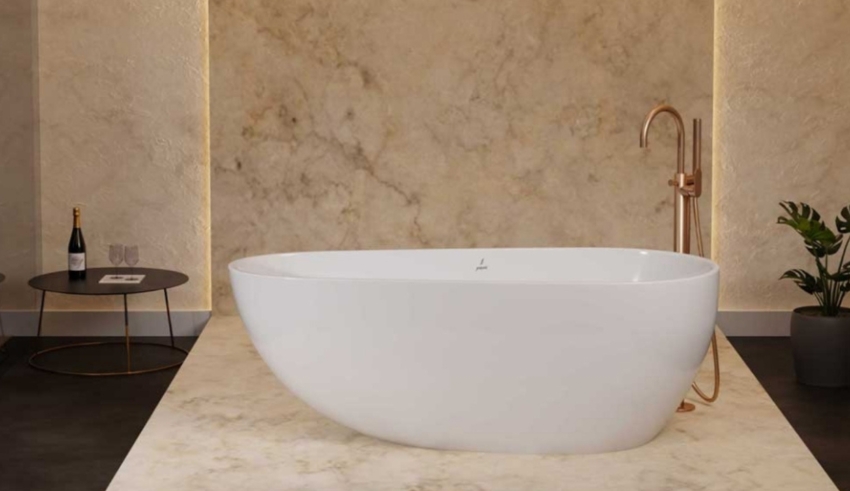
Choosing a freestanding bath has always seemed like a more challenging decision. You’re going to get something that’s in your bathroom for a long time—and you don’t want to walk into your bathroom three years later and feel it’s tired or outdated.
But here’s the good news. There are certain styles and materials that have universally withstood the test of time. They suit various spaces, match with changing decor, and have an aesthetically pleasing appeal. It’s not about predicting the future, but instead, acknowledging what’s always been deemed functional.
Materials That Withstand the Test of Time
The materials you choose for your freestanding bath are necessary and crucial from aesthetics to longevity. Acrylic is still one of the most commonly selected options due to practical usage. It’s lightweight; it retains heat to a fair degree; it comes in various shapes without breaking the bank; it has a finish that continues to look decent with average care (average acrylic won’t yellow or dull quickly).
Cast iron is the traditional option for a reason. It’s heavy (so your floors must support it appropriately), yet that density is beneficial. Enamel is an age-old finish because it works. It’s durable; it’s easy to clean; it’s a depth of material that manufacturers do not bother investing in with lesser materials. A white cast iron freestanding bath looks the part in an old period property as much as it does in more modern designs. Stone resin falls somewhere in between—the weight is still considerable but not as heavy as cast iron, and the material itself has a quality feel.
Here’s the rule about material: if you can get away with it, go with what’s been traditionally used in bathrooms for years. The newer composite materials may be all well and good—but they haven’t been around long enough to prove themselves yet. When scoping out options with Freestanding Baths suppliers, you can see the variety of materials offered—but focusing on what’s more established helps you narrow what’s suitable for the long haul.
Shapes That Fit Across Styles
Freestanding baths come in various shapes—some that make sense and others that don’t. The shapes that have longevity tend to be on the simpler side. The traditional roll-top bath (slipper bath) has been around since Victorian times and will look appropriate in all styles of bathrooms alike, as will rectangular, modern renditions—as long as they don’t have complicated edges.
Even modern rectangular freestanding baths have good appeal over time. They’re not trying too hard, so they don’t become those trendy pieces that age poorly. The well-proportioned rectangle that lends itself to white or neutral colors works across design change for people who shift their taste over time. Double-ended baths (both ends are rounded, and the taps go in the middle) provide versatility.
What shapes should worry you? Anything that pushes sculptural or asymmetric boundaries. While these complex shapes may look stunning in a showroom, they make everything else surrounding them conform. That’s a risk if you’re set on one particular vision but troubling down the line when that shape becomes inaccessible because everything else has to work around it.
Color Options That Are Timeless
White is still your safest bet—and there’s nothing wrong with safety when it comes to what’s neutral with everything else, makes spaces feel larger, and never competes with any other elements within a space. If anyone tries to tell you that white is boring, they’re likely trying to sell you something that’s much more expensive.
That being said, other colors can hold up well if they’re neutral enough to hold value but not get specific with decade-based trends. Soft greys and muted tones hold up enough because they’re neutral enough not to feel as if they’re crossing into specific identities. A pale grey freestanding bath still looks cool and sophisticated next to brass fittings or chrome; marble tiles or painted wood panels.
If you’re worried about bolder colors, consider where the color exists. A colored exterior of a freestanding bath with a white interior has visual distinction and less commitment. A black freestanding bath holds a controversial place—while it can look incredible with drama—but it shows soap marks and water marks more than its light counterparts—as long as you’re okay wiping down your freestanding bath regularly.
Details That Offer Longevity
Foot types are more important than you’d think. Traditional ball-and-claw feet have been around since the 1800s for a good reason—they’re pretty but not overly ornamental. If that’s too much for your space, turned feet or plinth bases offer transitional aesthetics across decor styles.
Chrome finishes are brushed nickel tried-and-true elements. They don’t tarnish easily; they keep cleanliness longer than other softer metals might. Brass is beautiful—and trendy right now—but takes constant upkeep to maintain its beauty. If you’re keen on brass, own it—but just know that maintenance costs money.
And decorative elements should go by the wayside. The more elaborate or textured a freestanding bath gets, the more appreciated now it will be but underappreciated down the line when something simpler could have had great construction instead.
Get Your Proportions Right
It’s not all about size—it’s about making sure proportions are right for your room and yourself. A giant freestanding bath isn’t going to look appropriate in a small bathroom—even if your stylist says otherwise. You need enough space around your freestanding bath to make it usable—not a cramped area. At least 60cm clearance either side from which you plan to access regularly makes sense.
When it comes to depth and length, proportions play a role where comfort is concerned—1500-1700mm is most beneficial for the average adult who would like ideal length for ideal comfort—rather than ideal cramped seating space—as anything less than 1500mm feels small and anything more than 1700mm starts intruding into floor space territory. Depth of 500-600mm gives enough soak depth without making getting in and out complicated.
Consider ceiling height too—a high-sided freestanding bath looks great in rooms with decent ceiling heights but can feel oppressive in low-ceiling areas; make sure proportions work throughout instead of only floor space considerations.
Making It Work Long-Term
There are general characteristics that help baths survive the test of time—proper construction materials, tried-and-true shapes, modest appeal—that don’t force the rest of the space into compliance because of unique perspective—not features that try too hard or appeal to fads through intricate details.
Your bathroom will change over time. You may paint over tiles; you may switch floors and fixtures—you may realize neutrals work better elsewhere after time goes by. A great freestanding bath stands adaptable—albeit not begrudgingly—but nicely—understanding what’s good down the line keeps it from feeling outdated—from creation of concept alone, it’s built to last.