
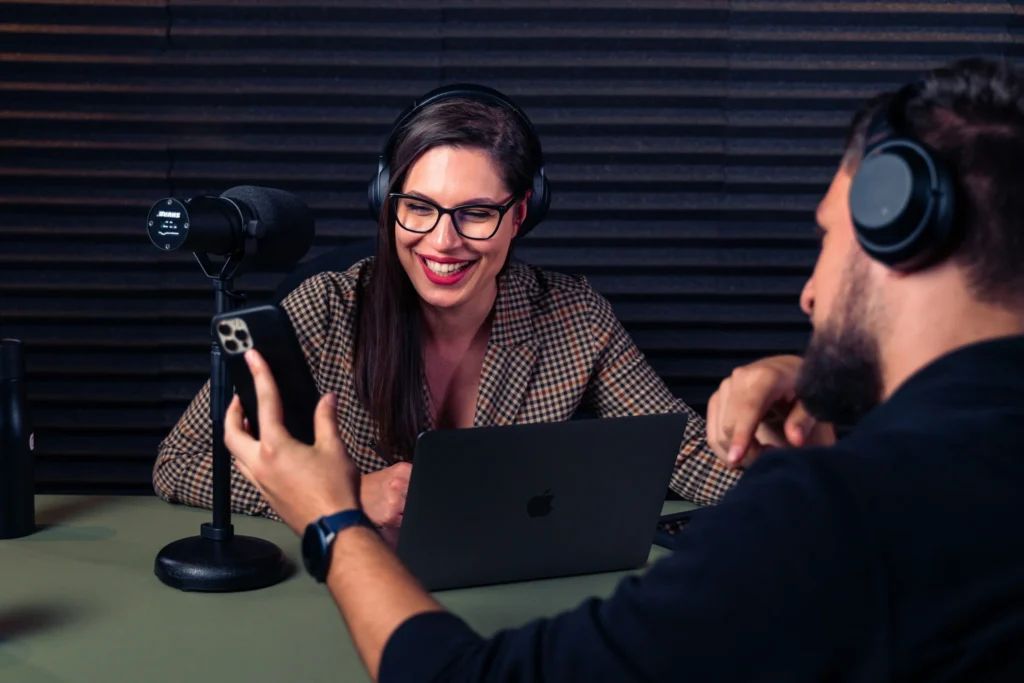
For generations, studying has followed a familiar routine: attend lectures, take notes, read textbooks, and review everything before an exam. While these methods remain important, they do not always match the way modern students learn or manage their time. College students often balance demanding coursework with internships, part-time jobs, extracurricular activities, and personal commitments. Finding enough uninterrupted time to review lecture material can be challenging, especially when multiple subjects require attention. Today, artificial intelligence and audio-based learning are creating new opportunities to study beyond the classroom, allowing students to transform recorded lectures and written notes into personalized educational podcasts that fit naturally into their daily routines.
Table of Contents
Why Traditional Lecture Notes Are Not Always Enough
University lectures can deliver an enormous amount of information in a relatively short period. A professor might explain complicated scientific processes, introduce unfamiliar terminology, discuss real-world examples, and answer student questions within a single hour. Students must simultaneously listen, understand, identify important concepts, and write everything down. This creates a difficult balancing act: concentrating on taking detailed notes can distract from understanding the explanation, while focusing entirely on the lecture may result in missing information needed for later revision.
Even students who take excellent notes may struggle to reconstruct the full meaning of a lecture several days later. Written summaries often capture important facts but leave out the examples, explanations, and connections that made those facts understandable in the first place. When examination season arrives, students frequently discover that their notes contain enough information to recognize a topic but not necessarily enough context to explain it confidently. This is one reason why combining written materials with recorded explanations can provide a more complete foundation for studying.
Lecture Recording Creates a Second Opportunity to Learn
One increasingly practical approach is to record lectures so students can revisit explanations that may have been difficult to understand during the original class. Instead of attempting to write down every sentence, students can concentrate on following the discussion, asking relevant questions, and noting the concepts that require additional attention. With permission from the instructor and in accordance with institutional recording policies, lecture recordings can become a valuable reference that supports later study sessions.
The benefits extend beyond simply replaying an entire class. A recorded lecture preserves the sequence of explanations, examples, and discussions that might otherwise disappear from memory. Students can return to complicated sections, compare the professor’s explanation with their textbook, and clarify misunderstandings before moving on to new material. When recording tools also provide transcription and note-taking capabilities, spoken information becomes easier to organize and review. This is especially useful in content-heavy subjects such as biology, medicine, engineering, psychology, and law, where understanding the relationship between concepts is often more important than memorizing isolated definitions.
However, recording lectures is only the beginning. A library of hour-long audio recordings can eventually become just as overwhelming as a collection of unorganized notebooks. The real opportunity lies in transforming those recordings into smaller, more focused learning resources that students can review efficiently.
Turning Study Notes Into Personalized Podcasts
Podcasts have become a familiar way to consume information because they allow people to listen while performing everyday activities. Educational audio builds on this convenience by making explanations accessible without requiring continuous screen time. Rather than reading the same chapter repeatedly, students can listen to a structured discussion of important ideas while walking across campus, commuting, exercising, or completing routine tasks.
AI makes this format particularly interesting because students are no longer limited to publicly available educational podcasts. With tools that support notes to podcast conversion, learners can create audio discussions based on their own course materials, including lecture notes, PDFs, readings, and study guides. Instead of searching for a podcast that happens to cover the right subject, they can generate an episode focused on the exact concepts being taught in their classes.
For example, a nursing student preparing for a pharmacology examination might create an audio discussion explaining medication classifications, mechanisms of action, and common side effects. A history student could listen to a conversation exploring the causes and consequences of a major historical event, while a computer science student might review algorithms through spoken explanations and practical examples. In each case, the educational content comes from the student’s own learning materials, helping make the review more relevant to the syllabus and upcoming assessments.
Why Conversational Audio Can Make Difficult Subjects Easier to Follow
One of the most interesting developments in AI-generated educational podcasts is the ability to present information through a conversation between two virtual hosts. Instead of listening to a single voice reading a summary, students hear a structured exchange in which one speaker introduces an idea while another asks questions, provides examples, or explains a related concept. This format can make an unfamiliar subject feel more approachable, particularly when the discussion breaks complicated information into smaller, understandable sections.
Consider a student learning about the cardiovascular system. A conventional textbook might present cardiac output, blood pressure, and vascular resistance in separate sections filled with terminology and equations. A conversational podcast could instead introduce cardiac output, explain how it relates to blood flow, and then discuss why changes in resistance affect circulation. Hearing these relationships explained in sequence may help students build a clearer mental model of the subject before returning to diagrams, formulas, or practice questions.
Conversational learning also resembles the experience of discussing course material with a classmate. Questions naturally introduce opportunities to clarify misunderstandings and connect new information with previously learned concepts. Although listening alone does not guarantee retention, well-structured audio can complement reading, visual study materials, and active practice by presenting familiar information in a different context.
Making Better Use of Time Between Classes
For many college students, one of the greatest obstacles to consistent studying is not a lack of motivation but the fragmentation of their daily schedules. A student might have twenty minutes between lectures, a thirty-minute commute, or a short walk to the library. These periods may feel too brief for a traditional study session involving textbooks, notebooks, and a laptop, but they can be suitable for listening to a focused educational episode.
Turning existing study materials into audio creates an opportunity to use these smaller periods productively. A student could review the previous day’s chemistry lecture while traveling to campus, listen to an economics explanation during a walk, or revisit the major themes of a literature seminar before meeting a study group. Short episodes can reinforce individual concepts, while longer discussions can provide broader overviews of a chapter or examination topic.
The goal is not to fill every free moment with studying. Rest and downtime remain important, and activities requiring full attention, such as driving, should never be compromised. Instead, audio learning provides an additional option for students who want to review material when sitting at a desk is impractical. It also makes studying more flexible for people who prefer spoken explanations or benefit from combining auditory and written resources.
Combining Podcasts With Active Recall for Stronger Learning
While educational podcasts can improve access to course material, listening should not replace active learning. Students may recognize terminology while hearing an explanation yet struggle to recall the same information independently during an examination. This difference between familiarity and retrieval is important because successful learning involves more than recognizing an answer when it is presented.
A useful strategy is to combine podcast listening with active recall. After completing a short episode, students can pause and summarize the main ideas without consulting their notes. They might explain a concept aloud, write down three important takeaways, or answer practice questions related to the material. If they cannot explain something clearly, they can return to the relevant transcript, lecture recording, or textbook section to identify what they missed.
AI-assisted study platforms can support this process by connecting multiple learning formats to the same collection of course materials. A lecture can provide the original explanation, notes can organize the information, podcasts can offer an additional review experience, and quizzes or flashcards can test what the student remembers. This creates a more purposeful study cycle than repeatedly reading notes or listening to recordings without checking comprehension.
A Practical Example: Preparing for an Exam With Audio-Based Learning
Imagine a college student preparing for a biology examination covering cellular respiration, photosynthesis, and energy transfer. During the week, the student attends lectures, records the sessions with permission, and collects presentation slides and textbook notes. Rather than leaving these materials scattered across different folders, the student organizes them by topic and uses AI tools to generate study summaries.
The next step is creating a series of short educational podcasts from the organized material. One episode explains glycolysis and the Krebs cycle, another discusses electron transport, and a third compares cellular respiration with photosynthesis. The student listens to the episodes during ordinary breaks throughout the week, focusing on one topic at a time instead of attempting to review the entire course in a single sitting.
After listening, the student works through quizzes and flashcards to identify gaps in understanding. If questions about ATP production remain difficult, they return to the relevant lecture explanation and study notes before attempting another review. By combining recording, listening, and self-testing, the student builds a repeatable learning routine that makes better use of existing course material without relying entirely on last-minute revision.
The Importance of Accuracy and Responsible AI Use
Despite their potential, AI-generated educational resources should not be treated as automatically accurate. Transcription systems can misunderstand technical terminology, lecture recordings may contain unclear audio, and generated summaries or podcast discussions can omit important details. Students should therefore verify essential concepts against their original lecture materials, assigned readings, and instructor guidance, especially in subjects where precise information is critical.
Responsible recording practices are equally important. Students should obtain any necessary consent before recording classes, respect university policies, and avoid sharing private discussions or copyrighted material without authorization. AI works best as a learning assistant that organizes and presents information, rather than as an unquestioned authority or a replacement for classroom participation.
The Future of Studying Is More Flexible and Personalized
The growing connection between lecture recording, artificial intelligence, and podcast technology points toward a more adaptable approach to education. Instead of treating lectures, notes, and revision materials as separate activities, students can build a connected learning process in which information moves naturally from the classroom into multiple forms of review. A lecture becomes a transcript, a transcript supports organized notes, and those notes become audio discussions, practice questions, or flashcards depending on the student’s immediate needs.
The greatest benefit of this approach is not simply convenience. It gives students more opportunities to revisit important ideas, recognize what they do not understand, and engage with course material in ways that fit their schedules. Written notes remain valuable, recorded explanations preserve context, and personalized podcasts create another accessible pathway to learning. Combined with active recall and regular practice, these tools can help students develop study habits that are more consistent and intentional.
As educational technology continues to evolve, successful studying may depend less on accumulating hours at a desk and more on making each interaction with learning material meaningful. By transforming classroom knowledge into resources that can be read, heard, questioned, and practiced, students can create a more flexible study experience that extends well beyond the lecture hall.
Continue Exploring Education Guides
Explore more courses, careers, exams, scholarships, skills and student resources.
- SAT or ACT? How to Decide Which Test Fits Your Student
- Real Estate Exam Prep: Should You Study on Your Own or Take a Course?
- SM Meaning in Text: What Does SM Mean in Texting? 2026
- How to Use Previous Year Questions Properly for JEE Preparation
- Every Digital Research Skill That Every Student Should Develop
- Body Sculpting Training: Complete Guide to Choosing a Professional Body Sculpting Course